

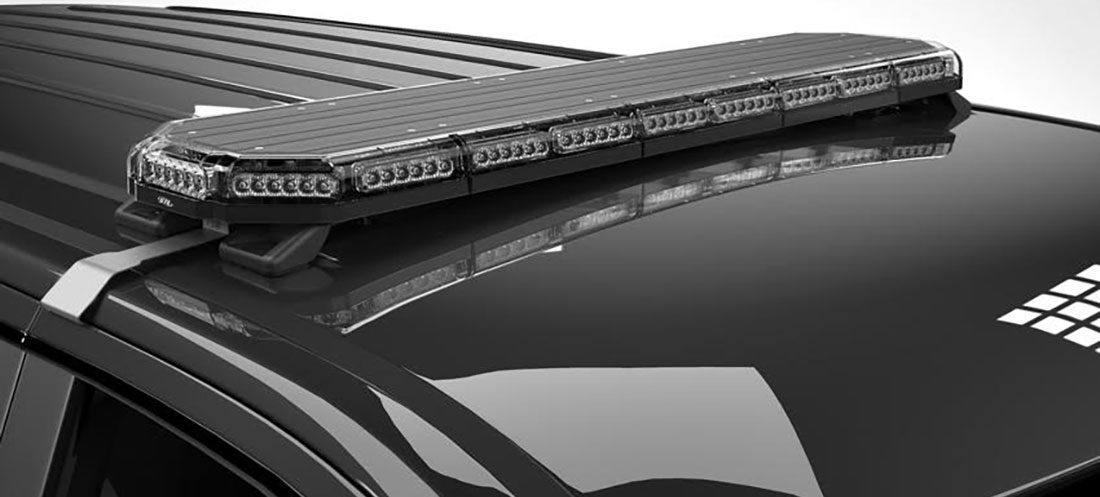
Vehicle strobe lights are high-intensity flashing lights used to maximize visibility for drivers, pedestrians, and bystanders. Today, virtually all professional-grade vehicle warning lights use LED technology rather than traditional strobe bulbs – delivering 50,000+ hour lifespans, lower power draw, and consistent SAE-compliant flash performance. At SpeedTech Lights, our expert team provides LED warning lights and emergency lighting solutions for law enforcement, fire, EMS, construction, and towing companies nationwide.
If you need to add lighting to an emergency response vehicle or a work truck, we’re here to help. The first step is to understand how strobe lights work and the proper way to use them, so that you can choose the ideal equipment for your unique needs.
What Are Vehicle Strobe Lights Used For?
Vehicle strobe lights are used for vehicles that are on the scene in emergencies or accidents, or any other situation that requires extra attention to notify other drivers in the area. Strobe lights are especially effective when paired with sirens on emergency vehicles.
These strobe lights are also used on police cars to notify drivers to pull over for a routine traffic stop. When the blue and red lights are on and flashing, then the driver in the front car knows that they need to slow down and pull over.
Not only are strobe lights used by emergency professionals and first responders, but construction crews and tow truck drivers often use amber-colored lights on their vehicles as well. When the work trucks are working on the road or stopped on the side of the road, it’s important to notify other drivers in order to minimize the risk of accidents. So, these lights should be turned on while the truck is parked and the team is working, so other drivers know something is going on and can stay out of the way. Research from the USFA (FA-323) shows that active warning lights, combined with retroreflective markings, significantly reduce the risk of secondary incidents at roadside scenes.
Some of the most common uses for vehicle strobe lights include:
- Emergency Vehicles (Police, Fire, EMS): The lights alert drivers to move over and clear a path to allow the emergency vehicles to move through as quickly as possible.
- Police Vehicles: The red and blue lights are used only on police vehicles to signal that drivers should slow down, move over, or pull over. Police use these lights for traffic stops.
- Construction Crews and Road Workers: Amber lights are an effective solution for increasing visibility on job sites, helping to protect safety for crew members, pedestrians, and other drivers in the area.
- Tow Truck Operators: Tow trucks need a way to signal road hazards when they are loading cars to tow away. Additionally, these strobe lights can be used while driving to notify other drivers about the larger load.
- Utility and Maintenance Vehicles: Utility crews are often working near roadways and use strobe lights to reduce the risk of accidents and collisions in the area.
How Vehicle Strobe Lights Work
Vehicle strobe lights are designed with LED arrays that deliver rapid, repeated flashes of light. LED technology is now the industry standard for emergency and warning lighting; they draw a fraction of the amperage compared to xenon, lasting 50,000+ hours vs. 1,000–5,000 hours for xenon strobes, and they are available in IP67/IP68 weatherproof ratings.
The rapid flashing pattern makes the lights highly visible and draws attention. Different flash patterns can be used to signal different levels of urgency, and the light colors help to notify about different types of situations. Choose modern strobe light systems that allow you to select from multiple flash modes based on the current circumstances. Acceptable flash rates are defined by SAE J845 (omnidirectional devices) and SAE J595 (directional devices), which specify minimum and maximum cycles per minute for each intensity class.
LED vs. Xenon Strobe vs. Halogen – Pros/Cons
| Feature | LED (Modern Standard) | Xenon Strobe | Halogen |
|---|---|---|---|
| Lifespan | 50,000+ hours | 1,000–5,000 hours | 500–1,000 hours |
| Power Draw | 1–10A (low) | 8–30A (high) | 5–20A (moderate) |
| Flash Rate Control | Programmable, precise | Limited | Very limited |
| Peak Brightness | Class 1 capable | Class 1/2 capable | Class 3 typical |
| Heat Output | Minimal | High | High |
| Weatherproofing | IP67/IP68 available | Moderate | Poor |
| Vibration Resistance | Excellent | Moderate | Poor |
| SAE Compliance | Class 1 / 2 / 3 | Class 1 / 2 | Class 3 only |
| Upfront Cost | Higher | Moderate | Low |
| Lifetime Cost | Lowest | Moderate | Highest |
Features of Strobe Lights for Vehicles
When you need strobe lights for your vehicle, it’s important to understand that there isn’t a one-size-fits-all solution for every vehicle. Some of the light bars are built with various flashing patterns, and it’s simple to use the controller to choose the pattern that works best for your individual needs. At SpeedTech Lights, we make everything customizable so that the lights fit your car and can be adjusted based on the current circumstances. You can even build your own custom configuration using our custom lightbar configurator.
For example, you can change the brightness and colors of the strobe lights to match the function of the car. Police cars use red, blue, and white lights, and these colors are limited only to emergency vehicles (so they shouldn’t be used on other types of vehicles). Every municipality has different regulations; make sure that you understand the local laws in order to determine the right products that should be installed on your car, especially if you are installing these lights on a construction vehicle or tow truck.
Some of the features that you should look for when selecting vehicle strobe lights:
- Flash Patterns: Choose lights with multiple selectable modes (split, quad, pursuit, steady burn, etc.)
- Color Options: The most common colors include red, blue, white, amber, and green.
- Brightness: Measured in candelas (intensity) and lumens (output). For daytime highway use, prioritize SAE Class 1-rated lights.
- Mounting Style: Grille, dash, surface, visor, roof, or integrated light bar options are available. The placement affects SAE directional compliance (J595 vs. J845).
- Weatherproofing: Some interior products can be weatherproofed for exterior use. Otherwise, look for products specifically designed for exposure to the elements.
- Power Consumption: LED systems draw 1–10A vs. 8–30A for xenon, which reduces alternator and battery load on emergency vehicles.
SAE Class 1 vs. Class 2 vs. Class 3
| Feature | Class 1 (Highest) | Class 2 (Moderate) | Class 3 (Basic) |
|---|---|---|---|
| Intensity Level | Highest | Moderate | Lowest |
| Primary Use | Highway / primary road emergency | Secondary roads, intersections | Parking lots, low-speed environments |
| Typical Vehicles | Police, fire, ambulance | Utility trucks, rural emergency | Security vehicles, private property |
| Flash Rate (typical) | 75–150 fpm | 60–120 fpm | 60–120 fpm |
| Daytime Visibility | Required (high candela) | Moderate | Limited |
| Common Colors | Red, blue, white, amber | Red, blue, white, amber | Amber, white, green |
| Governing Standard | SAE J845 / SAE J595 | SAE J845 / SAE J595 | SAE J845 / SAE J595 |
| Typical Environment | High-speed roadway | Urban / suburban roads | Slow-speed / off-road |
Vehicle Strobe Light Laws and Color Regulations by Vehicle Type
Strobe light laws vary by state and municipality. Color classifications are defined at the federal level under SAE J845 and SAE J595, but enforcement is state-controlled and the rules differ significantly across jurisdictions. Always check your local regulations to ensure that you are using the right lights for your vehicle.
Common Light Color Uses by Vehicle Type
| Vehicle / Use | Red | Blue | Amber | White | Green | Class |
|---|---|---|---|---|---|---|
| Police / Law Enforcement | YES | YES | YES | YES | NO | 1 |
| Fire Apparatus | YES | YES | YES | YES | YES | 1 |
| EMS / Ambulance | YES | YES | YES | YES | YES | 1 |
| Construction / Road Work | NO | NO | YES | YES | YES | 2-3 |
| Tow Trucks | NO | NO | YES | YES | YES | 2-3 |
| Utility / Maintenance Vehicles | NO | NO | YES | YES | YES | 2-3 |
| Volunteer Firefighters | YES | NO | YES | YES | YES | 1-2 |
| Emergency Mgmt / Incident Cmd. | YES | YES | YES | YES | YES | 1-2 |
Keep in mind that if you don’t comply with local regulations, then it can result in fines or even criminal proceedings, and you will need to dispose of the non-compliant lighting. So, always make sure that you know which colors are legal for your vehicle type, location, and use. If you need help identifying the permitted colors required for your vehicle, then our team at SpeedTech Lights can help you identify the best products for your needs.
How to Choose the Right Strobe Lights for Your Vehicle
When you are choosing the vehicle strobe lights, consider your vehicle type, where you will be using the lights, and the local regulations that need to be followed. For example, emergency vehicles have different requirements than construction trucks or tow trucks.
Here are a few things to consider when selecting strobe lights for your vehicle:
- Vehicle Type: What type of vehicle are you installing the lights on? (police, fire, EMS, construction, tow)
- Color Restrictions: What colors are legally permitted for your vehicle type? Make sure that you are following local laws.
- Operating Conditions: Daytime use usually requires SAE Class 1 (highest candela output) for adequate visibility in direct sunlight.
- Light Configuration: Full light bar, hideaway kit, grille/surface mount, or dash configurations are available. This choice affects SAE J595 (directional) vs. SAE J845 (omnidirectional) compliance.
- Mounting Compatibility: What mounting options are compatible with your vehicle? This varies depending on the type of vehicle and where the lights will be installed.
- Certifications: Confirm SAE J845 or J595 compliance, as required for your vehicle type and state.
Find the Right Vehicle Strobe Lights at SpeedTech Lights
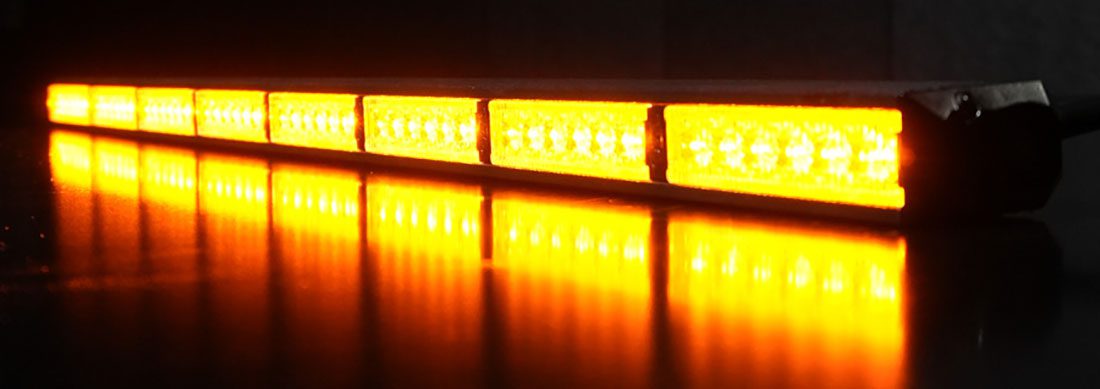
Choosing the right warning lights means matching SAE class, color, and mounting configuration to your vehicle type and state requirements, and that’s exactly what our team at SpeedTech Lights specializes in. Contact us for a free consultation, or browse our full catalog of SAE-compliant LED warning lights online.
At SpeedTech Lights, we carry a full selection of vehicle strobe lights for law enforcement, fire, EMS, construction, and commercial applications. Some of our most popular products include full-size light bars, tow truck light bars, LED beacon lights, and hideaway strobe kits. Browse our catalog online or reach out to our team for expert guidance on selecting the right lighting solution for your specific vehicle and application. We can even customize a specific configuration for your unique needs.
Frequently Asked Questions About Vehicle Strobe Lights
Are vehicle strobe lights legal for civilians?
Yes, in most states, civilians can legally use amber or yellow strobe lights on vehicles. These lights are often installed on tow trucks, construction equipment, or slow-moving vehicles. But red and blue lights are restricted to authorized emergency vehicles, so civilians should not place these lights on their private vehicles. Always check your state and local laws before installing strobe lights on any vehicle.
What is the difference between LED strobe lights and traditional strobe lights?
LED strobe lights use light-emitting diodes; traditional strobes use gas tubes. LEDs are the standard for SAE-compliant emergency warning lights today because they draw 1–10A vs. 8–30A for xenon, last 50,000+ hours vs. 1,000–5,000 hours, generate less heat, and withstand vibration far better.
What flash patterns are available for vehicle strobe lights?
Vehicle strobe lights can be programmed with many different flash patterns, including single flash, double flash, triple flash, quad flash, wig-wag, pursuit, and steady burn. We offer modern light bars and strobe units that allow you to switch between patterns as needed.
Do vehicle strobe lights need to meet SAE or DOT standards?
Yes. Emergency and warning lights must meet SAE standards, specifically SAE J845 (omnidirectional warning devices) and SAE J595 (directional devices). Always verify the certifications required for your vehicle type and state before purchasing.
What is the difference between SAE Class 1, Class 2, and Class 3 warning lights?
SAE J845 and J595 classify warning lights by intensity and intended use. Class 1 is the highest intensity, required for highway emergency vehicles. Class 2 suits secondary roads. Class 3 is for low-speed or parking-area environments. Choosing the wrong class is a common and costly compliance mistake.
SAE Class 1 vs. Class 2 vs. Class 3
| Feature | Class 1 (Highest) | Class 2 (Moderate) | Class 3 (Basic) |
|---|---|---|---|
| Intensity Level | Highest | Moderate | Lowest |
| Primary Use | Highway / primary road emergency | Secondary roads, intersections | Parking lots, low-speed environments |
| Typical Vehicles | Police, fire, ambulance | Utility trucks, rural emergency | Security vehicles, private property |
| Flash Rate (typical) | 75–150 fpm | 60–120 fpm | 60–120 fpm |
| Daytime Visibility | Required (high candela) | Moderate | Limited |
| Common Colors | Red, blue, white, amber | Red, blue, white, amber | Red, blue, white, amber, green |
| Governing Standard | SAE J845 / SAE J595 | SAE J845 / SAE J595 | SAE J845 / SAE J595 |
| Typical Environment | High-speed roadway | Urban / suburban roads | Slow-speed / off-road |
What are the SAE standards for vehicle warning lights?
All professional emergency and warning lights are governed by SAE standards that define minimum intensity, flash rate, and color performance. Understanding which standard applies to your vehicle ensures legal compliance and operational effectiveness.
- SAE J845 – Optical Warning Devices: omnidirectional Class 1/2/3 intensity ratings.
- SAE J595 – Directional Flashing Warning Devices: directional Class 1/2/3 intensity ratings.