

Emergency vehicle customization is the process of choosing and configuring the right warning lights for ambulances, fire trucks, and other types of emergency vehicles. The goal is to ensure visibility, safety, and compliance when the emergency response team is driving, on site, or actively participating in roadside operations. These lights alert the surrounding traffic about an emergency situation while signaling priority for the emergency vehicles, while also protecting responders who are working around the vehicle.
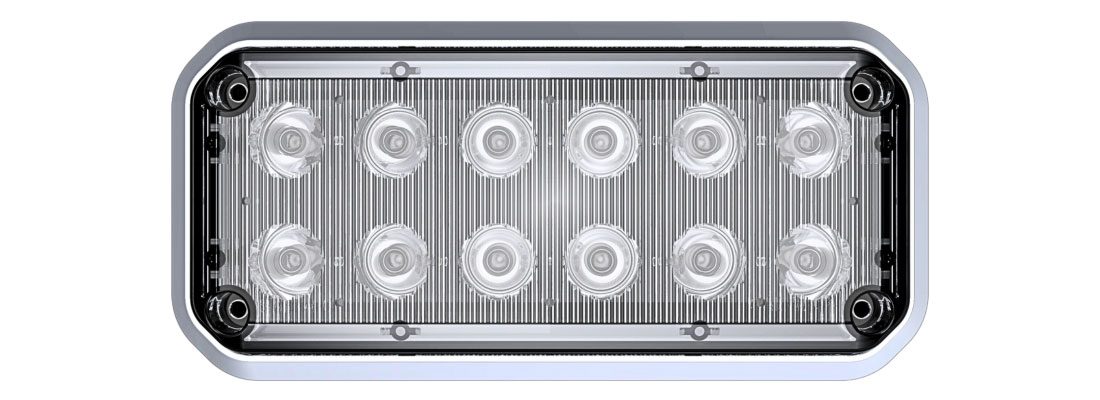
At SpeedTech Lights, we are here to help with your emergency vehicle customization, offering more than just great pricing for custom lighting. We pride ourselves on our ability to deliver the industry-specific options our customers need to customize their emergency vehicle to their exact specifications. These lights can be installed on the front, sides, and rear areas of the emergency vehicles. We offer quality, durable lighting products for fire departments, EMS agencies, volunteer responders, fleet managers, and emergency vehicle upfitters. Some of our most popular products, in our Alpha-Z series, are the perfect example of how this modern technology can be beneficial for your ambulance or fire truck.
What Emergency Vehicle Lights are Designed to Do
Emergency vehicle lighting is different from typical roadway illumination because these lights are designed to optimize visibility. The goal is to ensure that the emergency vehicle is seen quickly and other drivers recognize it as a responding vehicle due to the lighting placement and colors. The proper LED lighting improves safety for responders while also reducing the risk of collision when the emergency vehicles are stopped on or near a road. Emergency vehicle lights are effective in all conditions, including both daytime and nighttime hours, as well as rain, snow, fog, and traffic glare. Various flashing light patterns are used by first responders because the motion attracts attention faster than a steady, consistent light.
Research from the U.S. Fire Administration’s Emergency Vehicle Visibility and Conspicuity Study (FA-323) confirms that active warning lighting, combined with retroreflective markings, significantly reduces struck-by incidents for on-scene responders. The correct lighting configuration is a direct life-safety issue, not just a compliance checkbox.
How Emergency Vehicle Lighting Systems Work
LED lights are used for modern emergency vehicles because they are bright, durable, energy-efficient, and long-lasting. At SpeedTech Lights, we offer self-contained emergency lights that are mounted onto the vehicle, with built-in LEDs, electronic controls, and optics. Your emergency lighting system is fully customizable with various flash patterns that control how the lights pulse, alternate, or sweep so that you can maximize visibility. The lights can be synchronized with multiple lights flashing together, or you can choose a coordinated sequence depending on the unique needs of each situation.
At SpeedTech Lights, we are here to help each customer plan their customized lights by using defined vehicle zones. The right installation plan ensures full visibility around the entire vehicle.
💡 Understanding Emergency Vehicle Lighting Zones
Emergency vehicle lighting is typically planned across four zones to ensure 360° coverage:
- Front Zone: Grille lights, dash lights, and headlight flashers to alert oncoming traffic
- Rear Zone: Tailgate bars, surface mounts, and traffic advisors to protect the vehicle from behind
- Side Zones (Left & Right): Running board lights, side-facing surface mounts for cross-traffic visibility
- Perimeter / Roof Zone: Full-size or mini light bars for maximum omnidirectional coverage
NFPA 1900 (effective January 1, 2024) defines minimum warning zone coverage requirements for fire apparatus. Consult your upfitter to confirm compliance.
Why Choose Customized Emergency Lighting for Ambulances, Fire Trucks, and More
It’s critical to choose emergency lights based on the shape and size of your vehicle. There is never a one-size-fits-all solution for installing emergency lights, and these are some of the considerations that should be addressed when you are sourcing and buying LED lights for your emergency vehicle(s):
- Vehicle size, body design, and compartment layout
- Available mounting space and panel depth on the vehicle
- Operational environments where the vehicle will be used (urban streets, highways, rural roads, etc.)
- The team’s response roles, with different lights for fire, EMS, and volunteer vehicles
- Compliance with state and local regulations for light color, placement, and usage
| Vehicle Type | Typical Light Colors | Common Standard |
|---|---|---|
| Fire Apparatus | Red, White, Blue, Amber, Green (scene) | SAE J845 + NFPA 1900 |
| Ambulance / EMS | Red, White, Blue, Amber, Green (varies) | SAE J595/J845 |
| Police (marked) | Red, Blue, White | SAE J595 Class 1 |
| Police (unmarked) | Red, Blue, White | SAE J595 Class 1 |
| Tow Truck / Recovery | Amber, White | SAE J845 Class 1/2 |
| Construction / Utility | Amber, White, Green | SAE J845 Class 2/3 |
Alpha LED Ambulance / Fire Truck Warning Surface Mount Light Flash Patterns
Flash patterns are a critical part of any emergency vehicle lighting setup. The Alpha-Z series offers multiple programmable flash patterns to suit different operational needs. SAE standards require that compliant warning lights operate at 60-120 flashes per minute (FPM) – the Alpha-Z series meets this requirement. Common patterns include:
- Single Flash: A rapid single burst; widely used for general en-route warning
- Double Flash: Two rapid pulses per cycle; increases urgency and attention capture
- Alternating: Left/right light zone alternation; ideal for rear-facing traffic warning.
- Quad Flash: Four pulses in rapid sequence; high-intensity attention pattern for high-speed roadways
- Steady Burn: Continuous on; used for scene lighting and work-light functions
- Wig-Wag: Alternating headlight or grille flash; commonly used for oncoming traffic warning
Large Flush Mounts on Emergency Vehicles
Usually, flush-mounted products are installed on the sides of a fire engine or on the back of an ambulance. They are installed into the vehicle body at a position where the lens sits flush with the exterior surface of the vehicle. This design is ideal when you have limited space or need a low-profile installation.
Fire trucks, ambulances, and other emergency vehicles rely on large flush mounts to meet the light output requirements for each “zone” on their vehicle. It is necessary to ensure that the rules are followed to maintain visibility on the road during an emergency. Some of the most common locations for flush light installation include the side panels of a fire truck or the rear doors of an ambulance.
The benefits are undeniable: flush-mount lighting for emergency vehicles offers improved durability and a lower snag risk, while maintaining a clean, streamlined appearance on each vehicle. But there are a few tradeoffs that should be considered, such as a limited mounting depth (compared to surface mounts), which requires more careful installation planning.
Modular lighting systems, such as the Alpha-Z series, are designed with standardized light sizes and configurations. These systems can be customized to match your unique vehicle layouts, allowing easy upgrades and replacements in the future, so you can choose phased installation over time if needed.
| Factor | Flush Mount | Surface Mount |
|---|---|---|
| Profile | Lens sits flush with the vehicle body (low profile) | Protrudes from the surface (higher profile) |
| Snag Risk | Low risk – no protruding edges | Higher risk – exposed housing can catch obstructions |
| Light Output | Dependent on aperture size; zone-optimized | Generally higher output due to unrestricted optic spread |
| Installation | Requires panel cutting; more planning needed | Simpler – mounts to any flat surface |
| Maintenance | May require panel removal to access | Easier access – external mounting |
| Mounting Depth | Limited by vehicle body panel depth | Flexible – not constrained by panel depth |
| Best For | Fire truck side panels, ambulance rear doors, body-integrated installs | Grille, bumper, running board, any flat exterior surface |
Alpha-Z Lighting for Emergency Vehicles
At SpeedTech Lights, we are proud to offer the Alpha-Z in three sizes, giving volunteer firefighters, EMS personnel, and fire truck owners the opportunity to choose the cost-effective configuration that best meets their needs. With the recent introduction of our Alpha-Z Colored Lenses, our customers now have more options than ever. You can choose the size and features of LED light installations to customize your order.
Customization options include:
- Light size, output, and coverage: Larger lights usually have more built-in LEDs, which improves both brightness and coverage. But remember that brightness alone doesn’t determine effectiveness. Other design features that affect visibility include optics, placement, and flash patterns. At SpeedTech Lights, we’ll help with your selection of properly sized lights to reduce the total number of units needed
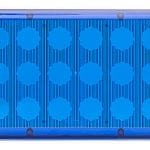
- Light colors and their purposes: Lenses are available in each size in 3 colors: Red, Blue, and Amber. Since color usage is regulated, you should always verify the color before installation
| Lens Color | Primary Use Case | Typical Vehicles | Regulatory Note |
|---|---|---|---|
| Red | Emergency warning; signals active emergency response | Fire apparatus, EMS, ambulances | Most commonly required for front and rear emergency warning |
| Blue | High-contrast daylight warning; law enforcement signaling | Police vehicles, fire police | Often restricted to law enforcement only; verify state law |
| Amber | Caution warning; non-emergency advisory | Tow trucks, construction, utility vehicles | Universal non-emergency warning color; fewest restrictions |
Features of the Alpha-Z Series
Is the Alpha-Z series right for your vehicle? Here are a few features to help you decide if you need this equipment:
- The Alpha-Z is available in 7×3, 6×4, and 7×9 sizes with varying amounts of 3-Watt MaxGen LEDs, and 7 color combinations
- The Colored Lenses give you more flexibility to customize the look of the LEDs when they are powered off. Build the exact visual look and performance you need
- To stretch your budget as far as possible, mix and match sizes or purchase the Alpha-Z and lens covers in a discount 4-pack
- 5-year standard warranty
This Alpha-Z series is easy to sync, easy to install, and the perfect way to add emergency lighting power to your vehicle in an affordable, yet powerful way. It is a great solution for volunteer fire departments looking to revamp a vehicle, replace old lights, or outfit a new vehicle on a budget. All Alpha-Z products are tested to meet SAE J595 (directional) certification standards.
| Model | Size | LED Count | Wattage per LED | Best Application |
|---|---|---|---|---|
| Alpha-Z 7×3 | 7×3 inches | 21 LEDs | 3W MaxGen | Tight panel spaces; perimeter lighting |
| Alpha-Z 6×4 | 6×4 inches | 24 LEDs | 3W MaxGen | Side panels; moderate zone coverage |
| Alpha-Z 7×9 | 7×9 inches | 63 LEDs | 3W MaxGen | Primary warning zones; rear and front coverage |
Installation and Synchronization Considerations for Emergency Lighting
If you are looking for an efficient way to pack as many ambulance warning lights as possible into a small surface area, then you need to consider the Alpha-Z products. This series simplifies the installation and eliminates the need to mount multiple products to get the same output. You’ll find that the Alpha-Z series is easy to install and sync on all types of emergency vehicles.
Before you start cutting the vehicle panels, create a plan for the wiring routes to connect the full system. Also, remember that the lights need to be sealed against water and debris to prevent damage and ensure long-term performance. To avoid visual confusion on the road, make sure the flash patterns are synchronized. Always test visibility from multiple angles and distances as you set the flash patterns and lighting features.
As always, compliance must be confirmed before the final installation to ensure your vehicles comply with all state and local regulations.
✅ Pre-Installation Compliance Checklist
Before cutting panels or pulling wire, verify the following:
- SAE Class confirmed: Class 1 required for most active emergency vehicles; Class 2 for service/maintenance roles
- Colors approved: Verify permitted light colors for your vehicle type and state
- Zone coverage mapped: Front, rear, and side zones identified and lighting assigned
- Wiring routed: All cable paths planned before panel cutting begins
- Flash patterns synced: Test visibility from multiple angles before final sign-off
SpeedTech Lights: Your Source for Reliable, Durable Emergency Vehicle Lights
Are you interested in learning more about the Alpha-Z series for your vehicle? Contact our team at SpeedTech Lights. We offer customized planning and configuration guidance for every customer, from single-vehicle outfits to full fleet programs.
Reach out to our team for a personalized recommendation, and we’ll help you identify the right products for your vehicle type, zone layout, and compliance requirements.
🛒 Get Expert Help Configuring Your Emergency Vehicle Lighting
SpeedTech Lights has supplied fire departments, EMS agencies, volunteer responders, and fleet managers for over 20 years. BBB A+ Rated. Free shipping on orders $50+ (code: FREESHIP). Government purchase orders accepted.
Call (800) 757-2581 | Mon–Fri, 9:00am–4:00pm CST | CustomerService@SpeedTechLights.com
FAQ
How bright do emergency vehicle lights need to be for optimal effectiveness?
Emergency vehicle lights must be bright enough to be visible in all conditions, including full daylight and bad weather, without blinding other drivers in the area. They also need to be easy to spot in heavy traffic. Most emergency departments follow SAE standards, which specify minimum light output, beam spread, and visibility distance to ensure both safety and effectiveness. Specifically, SAE J595 (directional) and SAE J845 (omnidirectional) define Class 1, 2, and 3 intensity ratings, with Class 1 representing the highest tested output. Most active emergency vehicles require Class 1 certification.
Can different light sizes be used on the same vehicle?
Yes, it’s common to use different light sizes on the same vehicle. The variation in light sizes can help improve overall visibility and function while also using the available space. The largest lights are usually mounted in the high-visibility areas (such as on top of the vehicle), with smaller lights placed in tighter spaces or as perimeter lighting. This approach ensures optimal visibility in all conditions. When mixing light sizes, ensure all units carry the same SAE class rating so your vehicle’s certification is consistent across all zones. Also, confirm that exterior-mounted lights, regardless of size, carry a weather protection rating.
Are flush-mount lights harder to maintain than surface-mount lights?
Since flush-mount lights are integrated into the body of the vehicle, they can be a bit harder to access, but maintenance is still possible by removing the panel during the servicing appointment. Flush-mount LED lights are still a good choice, especially since they are built for durability and longevity. Once they are installed, very little maintenance is necessary.
How do departments ensure lighting compliance?
It’s essential that your department sources lights that meet recognized safety standards. Only source lights from trusted upfitters who understand and meet local and national regulations. Additionally, your fleet should have routine inspections and thorough documentation to ensure that all vehicles meet lighting compliance requirements now and in the future.
Can emergency lighting be upgraded without rewiring the entire vehicle?
In many cases, it’s possible to upgrade the emergency lighting while using the existing wiring on the vehicle. This is the benefit of using a modular system: the plug-and-play components allow you to upgrade the lighting as needed, using the existing wiring and control models.
What SAE standard applies to ambulance and fire truck warning lights?
The two primary SAE standards for emergency vehicle warning lights are SAE J595 (directional flashing warning devices, such as surface mounts, grille lights) and SAE J845 (omnidirectional warning devices, such as beacons, lightbars, full-perimeter lights). Both assign Class 1, 2, or 3 ratings based on independently tested light intensity.
What is the difference between flush-mount and surface-mount emergency lights?
Flush-mount lights are installed into the vehicle body panel so the lens sits flush with the exterior surface, offering a low-profile, snag-free look, but require a more complex installation and limited mounting depth. Surface-mount lights attach to any flat exterior surface and are easier to install and service, but protrude from the vehicle. Both types are available in SAE-certified configurations; the choice comes down to your vehicle’s panel depth, aesthetic requirements, and zone coverage needs.
Do volunteer fire departments need the same SAE certification as career departments?
In most states, yes, the SAE class requirements are set by the type of vehicle and its authorized emergency status, not by whether the department is volunteer or career. A volunteer fire apparatus operating with right-of-way authority will generally need the same SAE Class 1 certification as a career department vehicle. However, budget-focused configurations like the Alpha-Z series make Class 1 certification achievable without requiring a full apparatus-level investment.