

Amber lights are the most widely permitted warning color in the United States. Unlike red and blue, which are legally restricted to authorized emergency vehicles in virtually every state, amber can be used on tow trucks, construction equipment, utility vehicles, pilot cars, and a wide range of non-emergency work vehicles. When you are choosing the right amber warning lights, it’s essential to understand the SAE class requirements for your vehicle type, the product format that best fits your mounting situation, and the operational features (flash patterns and control options) that determine long-term performance in the field.
In this guide, we’re sharing details about who uses amber warning lights and why, as well as the SAE standards that govern the use of these lights, how to compare product types, what to check before buying, and answers to the most common questions buyers have when outfitting a vehicle for the first time.
Who Uses Amber Warning Lights and Why
Amber is the standard non-emergency warning color because it communicates caution without implying police or fire authority. The vehicles most commonly fitted with amber flashing lights include:
| Vehicle Type | Primary Use of Amber Lighting | Typical Product |
|---|---|---|
| Tow Trucks | Rear warning when loading and towing; scene protection at roadside stops | Full-size amber bar with integrated traffic advisor |
| Construction / Utility | Work zone warning, lane closure direction, slow-moving equipment visibility | Mini bar, beacon, or surface mounts; traffic advisor for lane direction |
| Pilot / Escort Cars | Oversized load escort and traffic guidance | Rooftop mini bar or beacon with amber output |
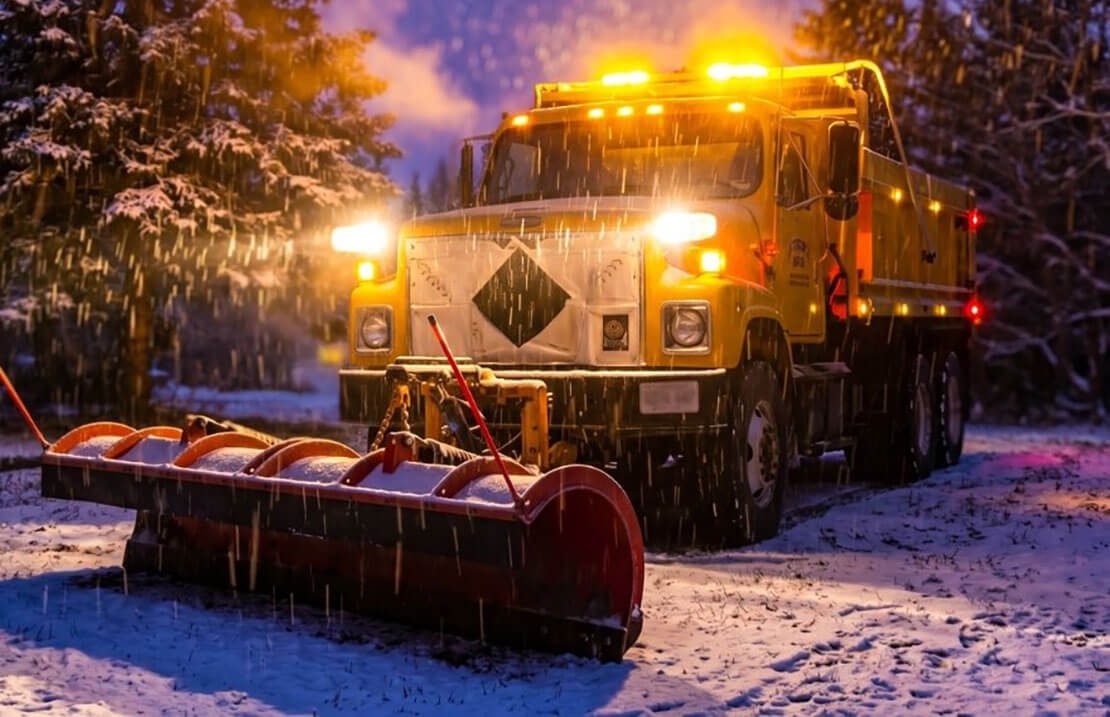
| Snow Plows / Maintenance | Low-speed road work visibility, especially in reduced-visibility conditions | Beacon or mini bar; running board surface mounts for side visibility |
| Utility / Service Fleets | General roadside hazard warning during service calls | Magnetic mini bar or dash-mount bar for quick deployment |
SAE Standards for Amber Warning Lights
When amber flashing lights are being used on public roads, they should meet SAE certification standards. The two primary governing standards are SAE J845 (for omnidirectional 360° warning devices, such as beacons and light bars) and SAE J595 (for directional surface-mounted units and stick bars). Both standards define three intensity classes:
💡 SAE Class Quick Reference
- Class 1 – Highest intensity. Required for most active emergency vehicles on highways and primary roads. Also, the safest choice for any high-speed roadside application.
- Class 2 – Moderate intensity. Standard for most tow trucks, construction vehicles, and utility vehicles on secondary roads and work zones.
- Class 3 – Lowest intensity. Suitable for stationary or very slow-moving equipment in off-road, parking lot, or private property settings.
For most roadside applications, including tow trucks and construction vehicles operating near live traffic, SAE Class 1 or Class 2 is recommended. Class 3 output is typically insufficient for daylight visibility at road speeds. Flash rate must fall within 60–120 flashes per minute (FPM) for both standards. Always verify your state’s specific class requirements before purchasing.
Amber is Universally Permitted, But State Rules Still Apply
Amber is the only warning light color that is generally unrestricted in the U.S. Red and blue carry legal restrictions because they are associated with authorized emergency vehicles. Using red or blue on a non-authorized vehicle can result in fines or equipment confiscation in most states. Here is how color permissions break down across common vehicle types:
| Vehicle Type | Red | Blue | Amber | White | Green | SAE Class |
|---|---|---|---|---|---|---|
| Fire Apparatus | YES | YES | YES | YES | YES | 1 |
| EMS / Ambulance | YES | YES | YES | YES | YES | 1 |
| Police (marked) | YES | YES | YES | YES | NO | 1 |
| Tow Trucks | NO | NO | YES | YES | YES | 1-2 |
| Construction / Utility | NO | NO | YES | YES | YES | 2-3 |
| Pilot / Escort Cars | NO | NO | YES | YES | YES | 2-3 |
Always verify with your state’s Department of Transportation or authority having jurisdiction (AHJ) before finalizing your lighting configuration. In some states, there are additional restrictions on color combinations or flash rates for specific types of vehicles.
Amber Warning Light Product Types: Choosing the Right Format
Amber warning lights are available in several different types of products, based on your mounting and operational needs:
Full-Size Light Bars
Full-size amber light bars (36–75 inches) provide maximum front and rear zone coverage from a single rooftop unit. These full-size light bars are the standard choice for tow trucks and large construction equipment that require high-profile visibility. Most models include an integrated traffic advisor (arrow stick) in the rear section for lane direction in live traffic.
Mini Light Bars
Mini light bars (14–27 inches) are a compact, lower-profile alternative for vehicles where a full-size bar is impractical. These smaller light bars are commonly used on utility trucks, service vans, or any cab configuration that limits rooftop space. Magnetic-mount models make it easy to quickly deploy the lights or take them down when needed. SAE Class 1 options are available in this format.
Traffic Advisor Stick Bars
Traffic advisors are rear-mounted directional arrow bars that indicate the direction of a lane closure for approaching traffic. They are available as standalone units, or you can choose to have them integrated into full-size bars. If you are using warning lights for any type of roadside work involving a lane closure, a traffic advisor is essential equipment, and amber is the standard color for all directional arrow functions.
Beacons
Amber beacons provide 360° omnidirectional output in a compact, single-unit format. These smaller beacons are the most common choice for slow-moving construction equipment, snow plows, and other similar vehicles that need simple, easy-to-install warning lights. SAE J845 governs beacon certification. Rotating, strobe, and LED beacon styles are available at different price points and intensity levels.
Surface Mount Lights
Amber surface mounts are designed to provide warning lights in the side zones and other supplemental warning positions that can’t be covered with a stick light bar, such as grille, bumper, running board, or cab corner positions. These surface-mount lights are commonly used in multi-zone setups along with the main light bar or as the primary warning system on vehicles where a rooftop bar is not suitable.
What to Check Before Buying Amber Flashing Lights
| Factor | What to Confirm |
|---|---|
| SAE Class | Class 1 or 2 for roadside applications near live traffic; Class 3 only for off-road or stationary setups. |
| State Color Rules | Amber is universally permitted; white and green are also allowed for most non-emergency vehicles; verify with your state DOT or AHJ. |
| Flash Patterns | 60–120 FPM required by SAE; programmable patterns allow adaptation to different scenes; pre-set memory retains preferred settings. |
| Mounting Format | Rooftop bar for primary warning; rear-mount traffic advisor for lane direction; beacons or surface mounts for supplemental or single-zone coverage. |
| Power Draw | LED units draw 1–10A (low); verify your vehicle’s electrical capacity before adding multiple units. |
| Control Panel | A switch box consolidates all warning functions into one cab-mounted control point; verify compatibility with all lights in your setup. |
| Lifespan | LED units are typically rated at 50,000+ hours vs 500–1,000 hours for halogen; LED is the standard for any new installation. |
LED vs. Halogen vs. Strobe: Why LED is the Standard for Amber Warning Lights
| Feature | LED | Xenon Strobe | Halogen |
|---|---|---|---|
| Lifespan | 50,000+ hours | 1,000–5,000 hours | 500–1,000 hours |
| Power Draw | 1–10A (low) | 8–30A (high) | 5–20A (moderate) |
| Flash Pattern Control | Programmable, precise | Limited | Very limited |
| SAE Class Capable | Class 1 / 2 / 3 | Class 1 / 2 | Class 3 only |
| Lifetime Cost | Lowest | Moderate | Highest |
Frequently Asked Questions
Why is amber the standard color for non-emergency warning lights?
Amber was designated as the universal caution color because it captures attention while still being distinct from red and blue, which are reserved only for emergency vehicles. Additionally, amber lights are highly visible in all lighting conditions. Most state laws either require or default to amber for non-emergency vehicles that need warning capabilities, and amber carries the fewest legal restrictions of any warning color. The MUTCD and most state DOT guidelines specify amber for work zone vehicle lighting.
What SAE class do I need for a tow truck or construction vehicle?
When your vehicle is being used for roadside operations with live traffic in the area, SAE Class 1 or Class 2 is recommended. Class 1 provides the highest intensity and the maximum safety for high-speed environments, such as freeways and highways. Class 2 is the standard for most tow trucks and construction vehicles on roads with lower speed limits. Class 3 is not suitable for roadside use if vehicles are driving at speed.
Do amber warning lights require SAE certification?
Any amber warning light used on public roads should meet SAE J845 (for omnidirectional devices such as beacons and light bars) or SAE J595 (for directional devices such as grille lights and stick bars). If you are using uncertified products, they may not meet the minimum intensity or flash rate requirements and could expose your business to liability in the event of an accident. Always check the product specification for the SAE class and standard.
What is the difference between a beacon and a mini light bar?
A beacon is a single, compact omnidirectional unit that provides 360° warning output. It is governed by SAE J845 and is often used for slow-moving or stationary equipment. A mini light bar covers the vehicle’s front and rear warning zones in a single, elongated unit, making it the ideal choice for vehicles that need directional output and broader coverage. Mini bars are available with SAE Class 1 certification, while many beacons are Class 2.
Can I use a magnetic mount amber light bar on any vehicle?
Magnetic mount bars work on any steel roof surface and are a popular choice for service vehicles, utility trucks, and any application where the light is often being added and removed from the vehicle. These magnetic mounts are not suitable for aluminum, fiberglass, or composite roof panels (an adapter bracket is necessary for these materials). Always verify the roof material and the magnet strength rating of the unit before purchasing.
How many flash patterns do amber warning lights need?
SAE standards require a minimum flash rate of 60–120 FPM. Depending on the product that you choose, there is a varying number of programmable patterns available. For most non-emergency amber lights, a handful of patterns are needed to cover most of the operational needs, including alternating flash, steady burn, and a traffic advisor sweep. If you have a more complex setup, like a tow truck with both primary warning and traffic-direction signals, you’ll benefit from a bar with more pattern options and a dedicated switch box to manage all functions.
Can I install amber flashing lights myself?
Most surface-mount and magnetic-mount products are easy to install and can be mounted without professional support. Permanent roof-mount bars and wired setups with a switch box require more planning, including cable routing, fuse protection, and mounting bracket selection. If the vehicle is part of a fleet or requires DOT compliance documentation, then we recommend professional upfitting services to ensure the installation meets all applicable standards.
🛒 Shop Amber Warning Lights at SpeedTech Lights
SpeedTech Lights has supplied tow operators, construction crews, utility fleets, and emergency responders with SAE-certified amber warning lighting for over 20 years. All products are physically stocked in-house for 1–2 day processing. BBB A+ Rated. Free shipping on orders $150+ (code: FREESHIP). Government purchase orders accepted.
Call (800) 757-2581 | Mon–Fri, 9:00am–4:00pm CST | CustomerService@SpeedTechLights.com