

When construction trucks are operating near active roadways, most U.S. states require that the vehicles be equipped with visible warning lighting that alerts approaching drivers to slow down and move over. Whether your crew is paving a highway, working a utility corridor, or running equipment near live traffic, the right construction warning lights protect your workers, reduce liability, and keep you compliant with state and federal work zone regulations.
This guide covers everything you need to know: the three core uses of emergency truck lights on construction sites, the SAE and regulatory standards that apply, permitted light colors for construction vehicles, what to look for when buying, and answers to the most common questions crews have before outfitting their trucks.
Roadside and Work Zone Warning: Making the Crew Visible to Traffic
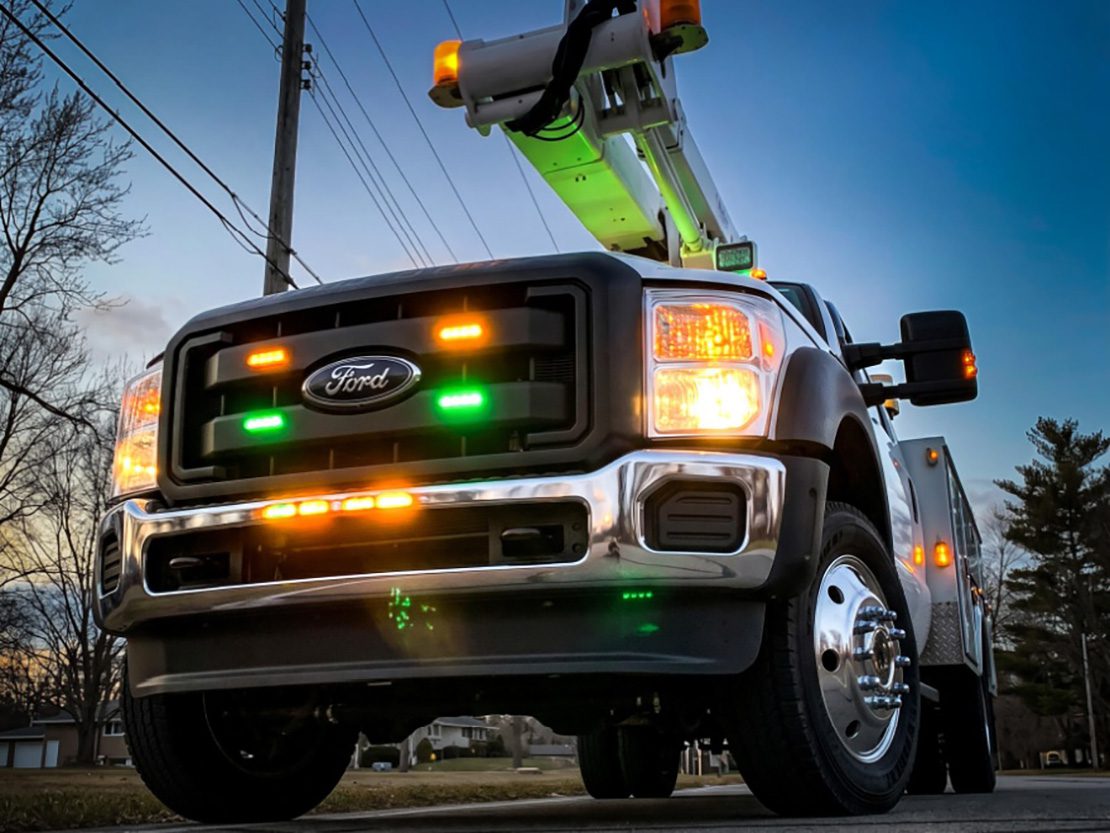
Roadside warning is the most critical function of emergency truck lights on a construction site. Research from the U.S. Fire Administration’s Emergency Vehicle Visibility and Conspicuity Study (FA-323) confirms that active warning lighting significantly reduces the risk of vehicle incursions into the work zone. When a construction truck is parked or moving near live traffic, the amber warning lights can be turned on to provide the visual cue drivers need to slow down and change lanes before reaching the work zone.
The Manual on Uniform Traffic Control Devices (MUTCD), published by the Federal Highway Administration, sets federal guidance for work zone traffic control. While specific lighting requirements vary by state and project type, amber warning lights on construction vehicles are a standard component of compliant work zone setups in most jurisdictions.
💡 Why Amber? Color Rules for Construction Vehicles
Red and blue warning lights are only authorized for emergency vehicles (police, fire, EMS) in most U.S. states. Construction trucks, utility vehicles, and tow trucks are generally restricted to:
- Amber: The primary and most widely permitted color for non-emergency warning.
- White: Permitted for scene lighting and supplemental warning in most jurisdictions.
- Green: Permitted in some states for specific roles (incident management, flaggers).
Traffic Direction: Moving Vehicles Around the Work Zone
When construction work is blocking part or all of a travel lane, the truck itself often serves as a physical barrier. A rear-mounted traffic advisor communicates to approaching drivers which direction they need to move, using directional arrow patterns that sweep left or right or split from the center out. This is the most direct way to actively guide traffic around the work zone without relying only on static signage.
Traffic advisor patterns are programmable and can be switched from the control panel in the cab when site conditions change. For construction trucks, amber is the standard color for all traffic-direction functions and is the color least likely to be restricted by state law.
Scene Lighting: Illuminating the Work Area
In addition to warning functions, emergency truck lights can also be used to illuminate the immediate work area when natural light is insufficient (such as flood-pattern work lights and surface mounts with white output). This type of lighting is especially relevant during early morning, late evening, or overnight shifts where the crew is working under portable or vehicle-mounted lighting.
White surface mount lights with a flood or hybrid beam pattern are often used for illuminating the work site. Unlike standalone portable lights, vehicle-mounted scene lights can be repositioned quickly by moving the truck, always keeping the site lit up in the areas where the crew is working.
SAE Standards That Apply to Construction Truck Warning Lights
Construction truck warning lights must comply with SAE J845 (for omnidirectional 360° warning devices, such as beacons and full-perimeter bars) or SAE J595 (for directional surface-mounted units). The class rating determines how bright the light must be to meet certification requirements.
💡 SAE Class Quick Reference for Construction
- Class 1 – Highest intensity. Required for vehicles with right-of-way authority on highways and primary roads. Exceeds most construction requirements while providing a maximum safety margin.
- Class 2 – Moderate intensity. Standard for most construction, utility, and maintenance vehicles on secondary roads and work zones.
- Class 3 – Lowest intensity. Stationary or very slow-moving equipment in off-road or parking lot environments.
For roadside construction projects that have live traffic passing through the area, SAE Class 1 or Class 2 products are recommended. Class 3 isn’t sufficient for roadside visibility, especially during daylight hours when the natural sunlight competes with warning output lights. Always verify your state’s specific requirements before purchasing.
Which Warning Lights Work Best for Construction Trucks
The right product depends on the truck type, work zone layout, and whether the vehicle is moving or stationary:
| Product Type | Best Use | Notes |
|---|---|---|
| Mini Light Bars | Primary rooftop warning | Compact, SAE Class 1 options available; easy to mount on cab roof or headache rack |
| Full-Size Light Bars | High-visibility highway work zones | Maximum front and rear coverage; integrated traffic advisor available in most models |
| Traffic Advisor Bars | Active lane direction | Rear-mount for arrow patterns; standalone or integrated with full-size bar |
| Beacons | Stationary equipment and slow-movers | 360° omnidirectional; SAE J845; ideal for slow-moving equipment and parked trucks |
| Surface Mount Lights | Zone fill and scene lighting | Grille, bumper, or running board; used to fill side zones or provide white flood output |
What to Check Before Buying Construction Warning Lights
| Factor | What to Confirm |
|---|---|
| SAE Class | Class 1 or 2 recommended for roadside work zones; Class 3 is insufficient for live traffic |
| Color | Amber required; white and green permitted in most states; red and blue prohibited for construction vehicles |
| Flash Patterns | 60–120 FPM required by SAE; programmable patterns allow crews to adapt to changing site conditions |
| Traffic Advisor | Rear-mounted unit essential for lane closure and traffic redirection on active roadways |
| Mounting Location | Roof/cab for primary warning; rear deck or tailgate for traffic direction; grille/bumper for supplemental zone fill |
| State Law | Some states impose specific color, flash rate, or product type requirements for work zone vehicles; verify before purchasing |
Permitted Warning Light Colors: Construction Vehicles vs. Emergency Vehicles
Make sure that you understand the distinction between emergency vehicle colors and construction vehicle colors before purchasing warning lights. Using red or blue on a non-authorized vehicle can result in fines or equipment confiscation:
| Vehicle Type | Red | Blue | Amber | White | Green | SAE Class |
|---|---|---|---|---|---|---|
| Fire Apparatus | YES | YES | YES | YES | YES | 1 |
| EMS / Ambulance | YES | YES | YES | YES | YES | 1 |
| Police (marked) | YES | YES | YES | YES | NO | 1 |
| Tow Trucks | NO | NO | YES | YES | YES | 1-2 |
| Construction / Utility | NO | NO | YES | YES | YES | 2-3 |
Always verify permitted colors with your state’s Department of Transportation or authority having jurisdiction (AHJ) before finalizing your lighting configuration.
Frequently Asked Questions
What color lights are legal for construction trucks?
In most U.S. states, construction trucks are permitted to use amber, white, and green warning lights. Red and blue are legally reserved for authorized emergency vehicles, and these colors are not allowed on private construction equipment. Amber is the primary and universally permitted color for non-emergency warning use.
What SAE class do construction trucks need?
For roadside work zones with live traffic, SAE Class 1 or Class 2 is recommended. Class 2 is the standard for most construction, utility, and maintenance vehicles. Class 3 is typically too low in output to be effective during daylight hours, especially when traffic is moving through the area. Always verify SAE class requirements for your vehicle before purchasing.
Do construction trucks need traffic advisors?
For any project involving a lane closure or partial road occupation, a rear-mounted traffic advisor is strongly recommended and may even be required by state DOT regulations or MUTCD guidelines. The directional arrow patterns show approaching drivers which lane is open and which direction they need to move, significantly reducing the risk of work zone accidents and unwanted site entrance.
Can I use a light bar from an emergency vehicle on my construction truck?
You can place an emergency light bar on your construction truck if the bar is available in amber or white. Red and blue LEDs must not be present or functional. Using a light bar that includes red or blue LEDs on a non-authorized vehicle is illegal in most states, even if those colors are not being actively used. The best solution is to purchase construction-specific products rated in permitted colors.
How many flash patterns do construction warning lights need?
SAE J595 and J845 require compliant warning lights to operate at 60–120 flashes per minute (FPM). Beyond that baseline, programmable patterns allow crews to switch between steady-burn, alternating flash, and directional sweep as site conditions change.
Can I use the same lights on a tow truck and a construction truck?
Yes, the permitted color set is the same for both vehicle types (amber, white, and green, but no red or blue), and SAE Class 1 or 2 products work on both. SpeedTech Lights’ tow truck light bars and construction warning products share the same SAE-certified platform. The main difference is the mounting configuration.
🛒 Shop Construction Truck Warning Lights at SpeedTech Lights
SpeedTech Lights has supplied construction crews, utility fleets, and tow operators with SAE-certified warning lighting for over 20 years. All products are physically stocked in-house for 1–2 day processing. BBB A+ Rated. Free shipping on orders $50+ (code: FREESHIP). Government purchase orders accepted.
Call (800) 757-2581 | Mon–Fri, 9:00am–4:00pm CST | CustomerService@SpeedTechLights.com